

Our feet are constantly under pressure, walking thousands of steps every day, wearing shoes, and dealing with environmental stress, yet we often forget to take care of them.
Over time, the skin on our feet shows signs of aging faster than the skin on our face or hands. This includes dryness, cracking, thick calluses, thinning, and a dull appearance. The good news is that regular professional pedicures are one of the most effective ways to slow down or even reverse these visible signs of aging. Far beyond just nail polish and looking good, a good pedicure is a proactive form of anti-aging skincare for your feet.
In this guide, we explore why foot skin ages faster than other parts of the body and how consistent pedicures can act as a powerful prevention and corrective treatment for keeping your feet looking youthful and healthy as you get older.
Why Foot Skin Ages Faster Than Other Body Skin
Foot skin is particularly vulnerable. It has fewer oil glands than facial skin, making it naturally drier. The constant rubbing from shoes and socks, the pressure from body weight, and exposure to dust, pollution, and rough surfaces all contribute to the breakdown of collagen and elastin. Unlike the face, feet rarely get sunscreen or moisturizer, which means they’re more susceptible to UV damage and oxidative stress. As a result, aging feet often develop:
– Thick, hardened calluses
– Deep cracks (heel fissures)
– Loss of elasticity and volume
– Discolored, brittle nails
– Visible fine lines and rough texture
Without treatment, these changes can get worse quickly after the age of 30–35, especially in humid or dry climates.
What Happens During a Professional Pedicure
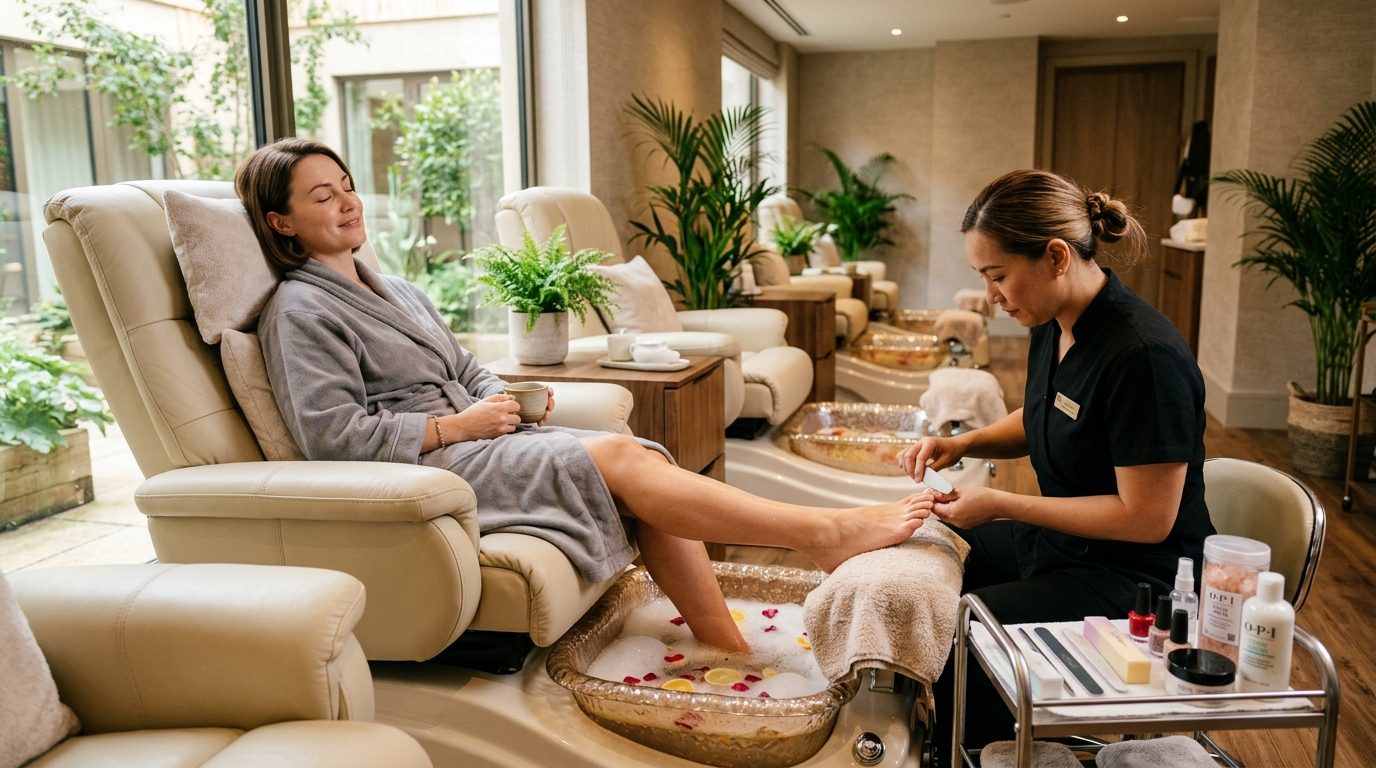
A professional pedicure is a multi-step treatment designed to clean, exfoliate, hydrate, and protect the feet.
A typical 60–90 minute session includes:
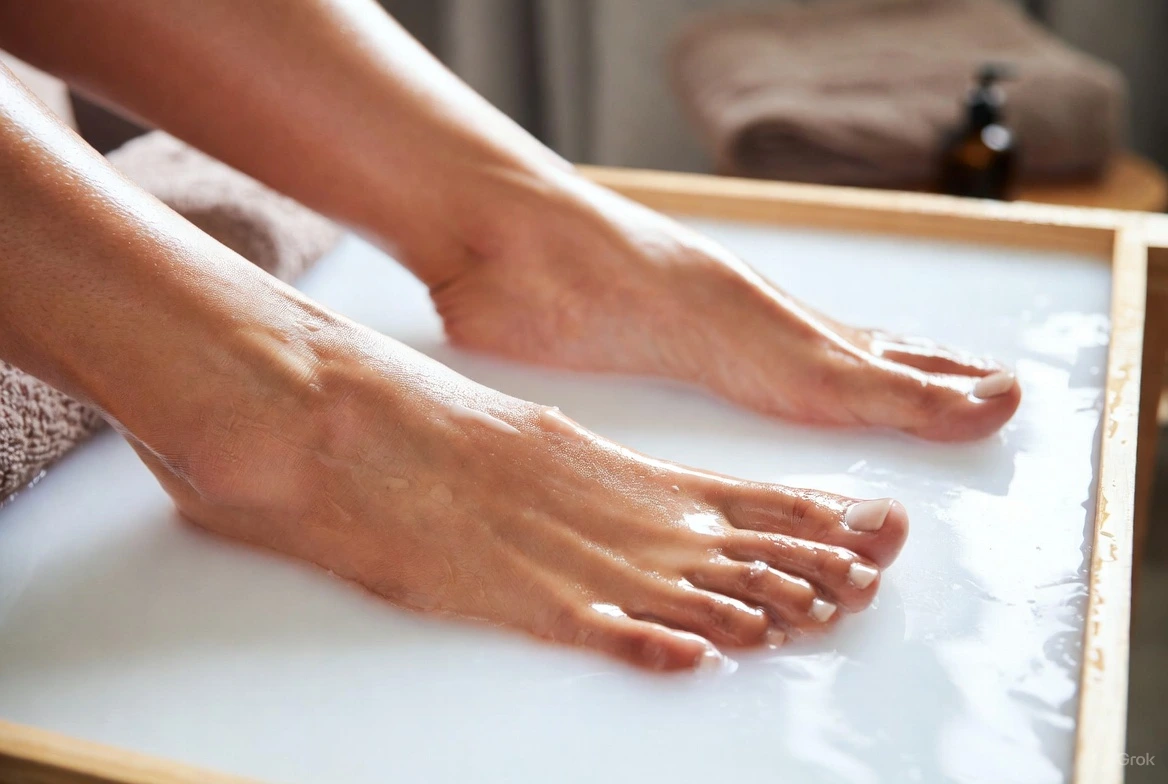
1. Soaking — Warm water with softening agents loosens dead skin.
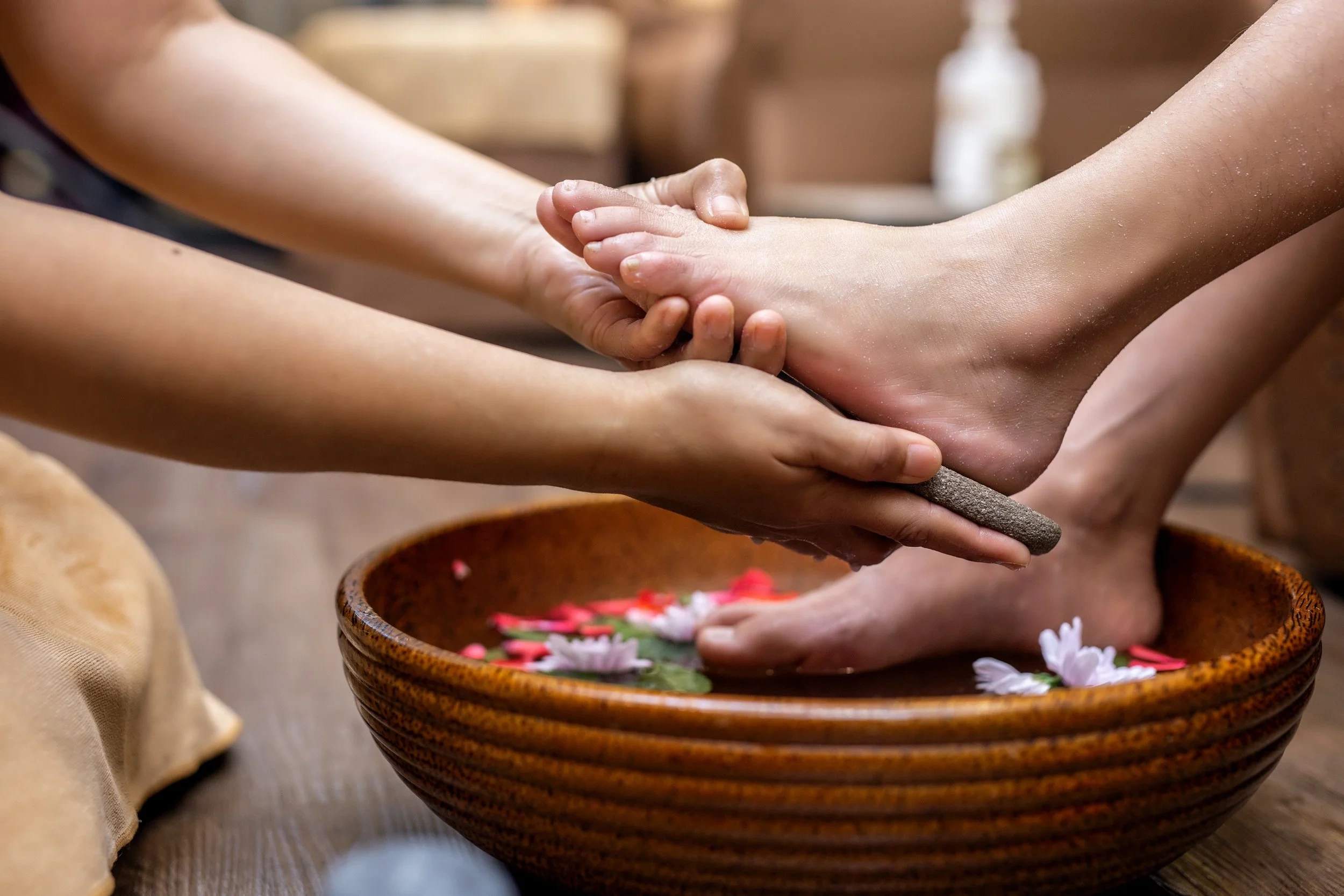
2. Exfoliation — Mechanical or chemical removal of dead skin cells and calluses.
3. Callus reduction — Safe filing or rasping of hardened areas.
4. Cuticle care — Gentle pushing and trimming of overgrown cuticles.
5. Nail shaping and buffing — For healthy, even nail growth.
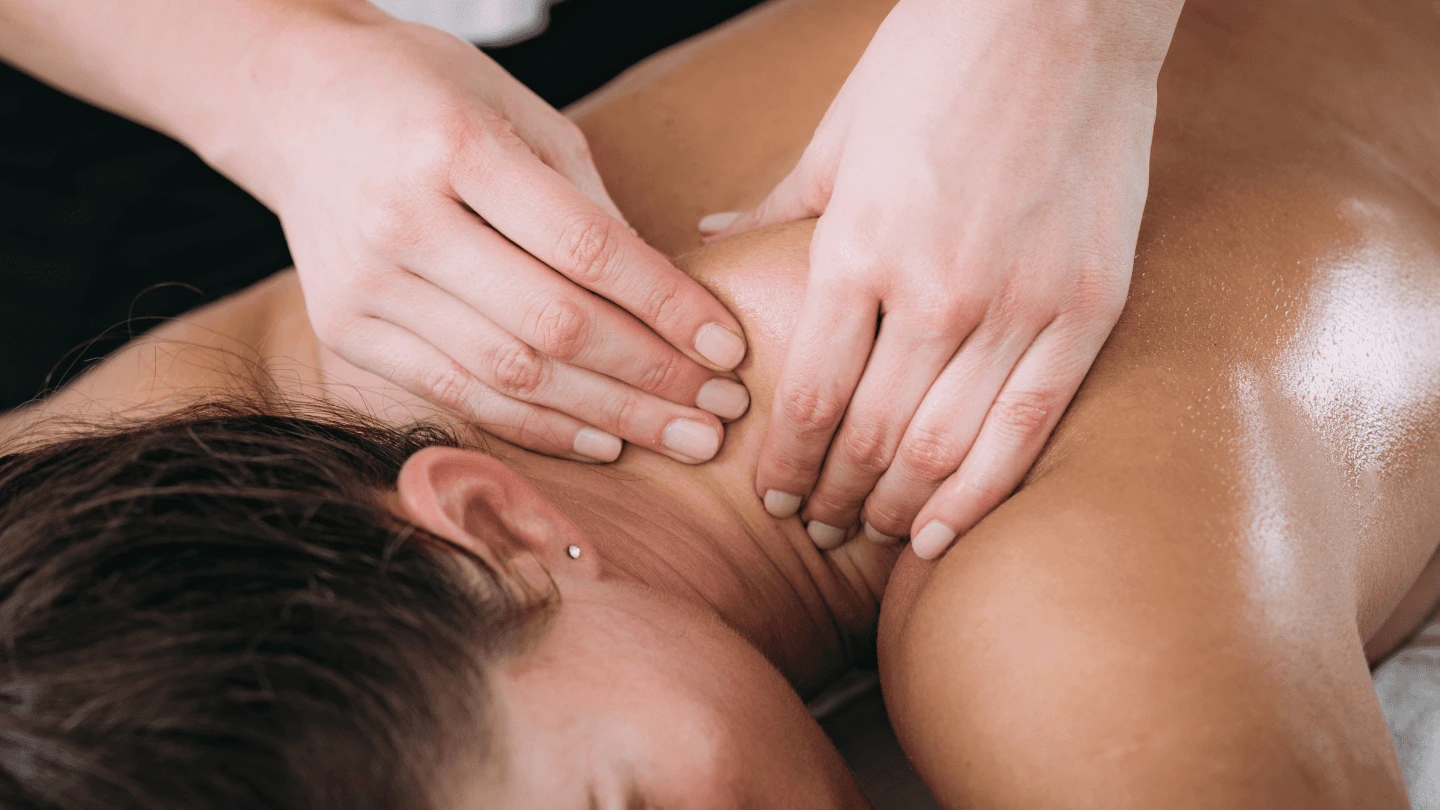
6. Massage — Improves circulation and relaxes muscles.
7. Mask and moisturizing — Deep hydration using rich creams or serums.
8. Polish or seal — Optional protective top coat.
Modern anti-aging pedicures often include antioxidant serums, hyaluronic acid, or collagen-boosting ingredients to enhance skin rejuvenation.
Book Your Appointment
Hydration Helps Reduce Fine Lines and Cracked Heels
Dehydrated skin loses elasticity and develops fine lines and cracks.
Professional pedicures deliver intense hydration through masks and creams rich in humectants (such as glycerin, urea, hyaluronic acid, or shea butter). These ingredients draw moisture deep into the skin layers, plumping up the surface and smoothing out existing lines. Regular sessions prevent the cycle of dryness leading to cracking and further aging. Studies show that consistent hydration can significantly reduce heel fissure severity within 4–6 weeks.
Improves Blood Circulation in the Feet
The massage component of a pedicure stimulates blood flow, delivering oxygen and nutrients to skin cells while removing waste products.
Better circulation slows the breakdown of collagen and supports natural repair processes. Poor circulation, which is common in aging or sedentary lifestyles, accelerates skin thinning and dullness. Regular pedicures counteract this, keeping foot skin firmer and more vibrant.
Prevents Hard Skin and Callus Formation
Calluses form as a protective response to repeated pressure and friction.
If left unchecked, they can thicken, crack, and make the skin look older. Professional pedicures safely reduce callus buildup using specialized tools and exfoliants, preventing the skin from becoming leathery or fissured. By maintaining thinner, healthier skin layers, pedicures stop the cycle of excessive hardening that can signal premature aging.
Helps Maintain Smooth and Soft Skin Texture
Exfoliation removes the dull layer of dead skin, revealing a fresher layer underneath.
Combined with deep moisturization, this restores a smooth, supple texture. Over time, regular pedicures help the skin renew itself more efficiently, reducing roughness and maintaining a soft, youthful feel. Many clients notice visible improvement in skin quality after just 3–4 sessions.
Protects Nails and Cuticles from Aging Signs
As we age, our nails can become brittle, yellowed, or ridged, while cuticles can dry out and split.
Pedicures address this by gently cleaning, shaping, and nourishing nails and cuticles with oils and creams. Regular care prevents fungal issues, keeps nails strong and clear, and maintains healthy cuticles that protect the nail bed all contributing to younger-looking feet.
How Often You Should Get a Pedicure to Prevent Aging
For preventive anti-aging benefits, schedule a professional pedicure every 4–6 weeks.
This frequency helps keep callus buildup under control, maintains hydration levels, and supports consistent skin renewal. If you have very dry or cracked heels, start with every 3–4 weeks for the first 2–3 months, then shift to a maintenance schedule. At-home care between sessions, such as daily moisturizing and gentle exfoliation 1–2 times a week, can greatly enhance results.
Why Regular Foot Care Is Important for Long-Term Skin Health
Feet are often the most neglected part of the body, yet they affect mobility, posture, and confidence.
Consistent pedicures are a form of preventive medicine for foot skin. They slow collagen loss, maintain the skin’s barrier function, reduce inflammation, and support healthy cell turnover. Over time, this leads to fewer cracks, less pain, better nail health, and feet that continue to look and feel youthful even in your 50s, 60s, and beyond. Investing in regular foot care pays off in terms of comfort, appearance, and overall quality of life.
Book Your Appointment
Conclusion
Pedicures are more than just a luxury they’re a scientifically backed way to stop and even reverse the visible signs of aging on your feet.
By deeply moisturizing, boosting blood flow, carefully exfoliating, and taking care of your nails, regular pedicures tackle the specific challenges that cause feet to age faster than other parts of the body. By sticking to a schedule of every 4 to 6 weeks, you can keep your feet smooth, soft, and supple, avoiding the discomfort and embarrassment of cracked heels, thick calluses, and dull-looking skin.
Don’t wait until you notice problems.
Start treating your feet with the same attention you give your face. Your future self and your feet will appreciate the youthful comfort and confidence that comes from taking care of your feet ahead of time.